Have you ever felt the need to take time off for a mental health difficulty but feared the response from your boss so you just called in sick? Usually, when we ask for a sick day, it is due to a physical illness, such as a cold or severe allergy. While mental health issues are often just as serious we are hesitant to ask for the day off because there are usually no sick days for emotional problems. Even when there are, frequently we still won’t call in and ask to take the day for something mentally health related.
However, the communication of one employee and her boss recently went viral for calling attention to this problem. The woman Madelyn Parker, age 26, is a software developer in Ann Arbor Michigan, working for Olark, a live-chat platform that helps businesses communicate with customers. It is a relatively small firm with about 40 employees.
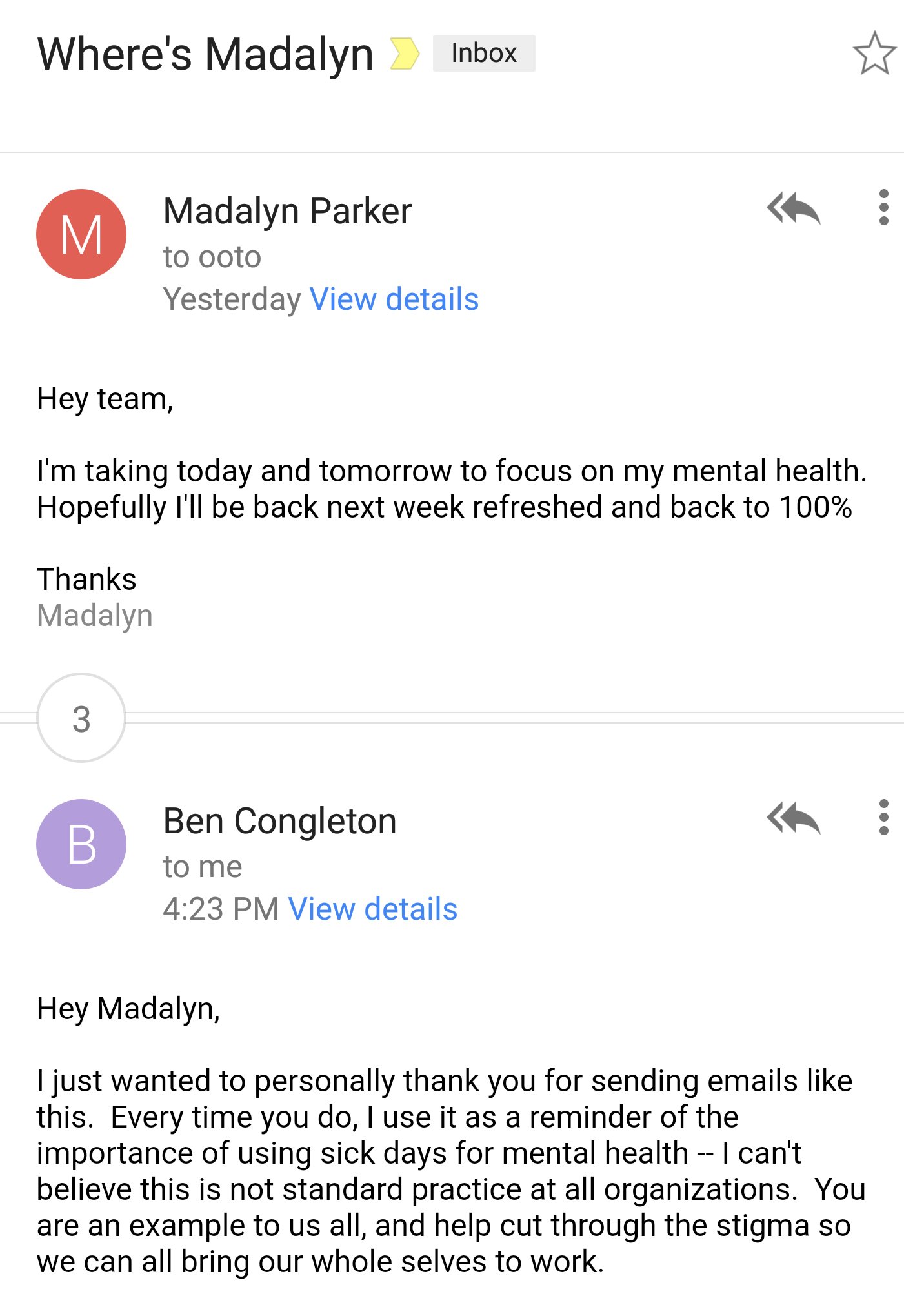
Parker had been experiencing several nights of insomnia and was having suicidal thoughts. She suffers from chronic depression and anxiety, which had built up to a point she didn't feel she'd be effective in her position without some time off for herself. She decided to take two sick days, and explained the reasons for doing so to her team. In an email she said she was taking the time to "focus on my mental health."
She was somewhat apprehensive about how the CEO of the company would react and whether it might hurt her reputation in the future with the company. However, she felt a responsibility to let the other employees know that there should be no shame in taking a mental health day when needed to feel better and be better able to do their job. She wasn't sure the CEO would see it that way however.
The CEO of the company sent a response which was not what she expected to receive and which brought Parker to tears. In it, he thanked her for being honest about the reason behind her need for time off. He further stated that her email reminded him of the importance of mental health time, and helped decrease the stigma associated with mental health needs. He stated that he would be work to make mental health time an accepted part of the self care model and encourage others to take this time when needed.
Parker had been experiencing several nights of insomnia and was having suicidal thoughts. She suffers from chronic depression and anxiety, which had built up to a point she didn't feel she'd be effective in her position without some time off for herself. She decided to take two sick days, and explained the reasons for doing so to her team. In an email she said she was taking the time to "focus on my mental health."
She was somewhat apprehensive about how the CEO of the company would react and whether it might hurt her reputation in the future with the company. However, she felt a responsibility to let the other employees know that there should be no shame in taking a mental health day when needed to feel better and be better able to do their job. She wasn't sure the CEO would see it that way however.
The CEO of the company sent a response which was not what she expected to receive and which brought Parker to tears. In it, he thanked her for being honest about the reason behind her need for time off. He further stated that her email reminded him of the importance of mental health time, and helped decrease the stigma associated with mental health needs. He stated that he would be work to make mental health time an accepted part of the self care model and encourage others to take this time when needed.
The tweet of a screenshot of the emails, have been “liked” over 50,000 times and retweeted more than 25,000 times. There was an immediate surge of replies. Many disclosed stories of the negative response they received when attempting to legitimately take mental health days. Some people stated that requests to take a mental health day were refused despite having mental health days included in their benefits.
The employee summed up the reason she felt it was important to be open about the reason she was taking two days off.
"I'm specific to be an example so my team knows that they can feel comfortable taking sick leave for mental health, even if they don't say it."
It is people like these, who have the courage to admit to vulnerabilities and the need to take care of themselves when these difficulties present who change the way companies respond to such situations. By treating this type of concern as important but able to be handled with time off, employees and managers both can help decrease the negative attitudes and automatic judgmental assumptions that often occur when someone discloses that they need time off to handle an emotional difficulty.
We need to make it safe for employees and managers as well to feel they can trust the reaction of their supervisors when they are feeling emotionally vulnerable and in need of time off. This can only occur in an atmosphere of acceptance, allowing those who are having transient mental health difficulties that can be handled in a short period to feel confident in the response they will receive such that they are comfortable asking for the time off.


